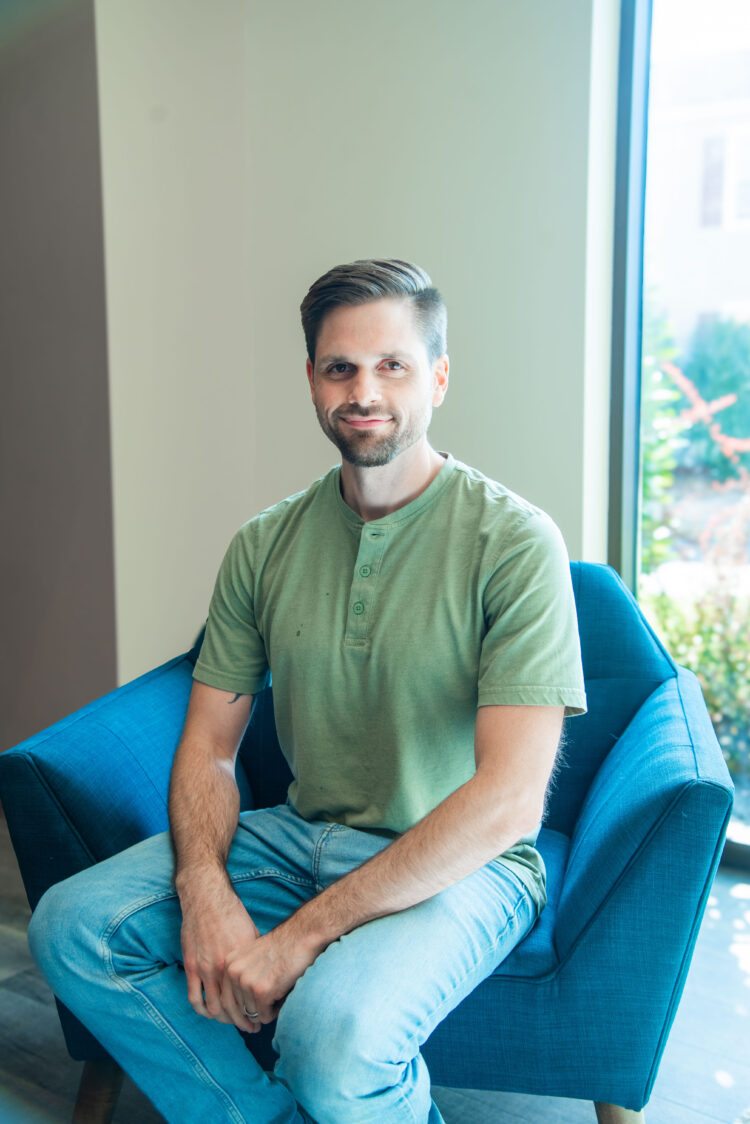
A Conversation with Paul Myers
These days strong opinions seem to be everywhere. Knowing when to speak up, and how to do it well, can feel overwhelming. We asked Midlothian Campus’ Paul Myers some questions to learn more about what it looks like for him to stay grounded in his beliefs while still leading with patience, curiosity, and respect.
How did you learn to pick your battles?
Paul doesn’t describe himself as naturally confrontational. In fact, it’s been the opposite for most of his life.
“I’ve always leaned toward avoiding conflict,” he said. “That’s not necessarily a strength, but it’s shaped how I show up with people.” Over time, that tendency gave him a reputation for being steady and thoughtful – someone who didn’t jump into arguments or react emotionally.
It wasn’t until college, while working through his Master of Social Work program, that Paul began to develop a more balanced approach. “I had to learn how to be assertive without being aggressive,” he explained.
As his leadership responsibilities grew, both in his work and in the church, Paul realized that avoiding hard conversations wasn’t sustainable. “When you ignore things, they don’t go away,” he said. “They usually come back later in ways that are harder to deal with.”
Today, Paul tries to hold that balance carefully. He doesn’t rush into conflict, but he also doesn’t pretend problems aren’t there. “I probably have a longer fuse than most,” he said. “That might come from how I was raised, or from watching conflict go badly for other people. Either way, it’s something I’m aware of and try to use wisely.”
How do you stay calm and curious when emotions run high?
For Paul, one of the hardest places to do this is online.
“Social media is where I feel myself getting worked up the fastest,” he admitted. “Even though I try to limit how much I’m on it, it still gets to me sometimes.”
Over time, Paul has adopted a simple mindset that helps him step back. “Most of the time, people aren’t on social media to have thoughtful conversations,” he said. “They’re sharing strong opinions about things they already feel deeply about… and they’re not really looking to change their minds.”
Because of that, Paul rarely jumps into online debates, especially when he feels defensive. “Those conversations almost always go better in person,” he explained. “You can see someone’s face, hear their tone, and understand that disagreement doesn’t mean disrespect. Online, it’s way too easy to misunderstand each other.”
How do you tell the difference between convictions and preferences?
Paul describes himself as someone who naturally wants to understand people. That empathy shapes how he thinks through big questions. But, it also means slowing down before drawing hard lines.
“When I’m trying to decide whether something really matters to me or is just a preference, I spend a lot of time thinking about it,” he said. That often includes reading, listening, and talking things through with people he trusts.
“My wife is usually the first person I talk to,” Paul shared. “I also have conversations with friends and leaders at church.” Recently, a casual car ride with pastors Elijah and Tanner turned into a meaningful discussion about how certain parts of the Bible can be understood. “Hearing different perspectives helped clarify my own.”
Paul is honest about the fact that feelings alone aren’t always reliable guides. “Just because something feels right doesn’t mean it is,” he said. “And sometimes we don’t feel drawn to things that are actually good for us.”
That’s why Paul believes perspective matters so much.
When it comes to interacting with others, Paul wants to stay open without losing clarity. “I don’t want to come across as closed off. There are things that really matter. Our faith, who Jesus is, what He’s done. On those things, I’m settled.”
At the same time, Paul recognizes that many areas of life allow room for different approaches. Parenting is one example. “I’ll always listen if someone has a different perspective,” he said. “But after a lot of thought and conversation, I usually know how I want to lead my family. Being open doesn’t mean being unsure.”
Staying grounded in a noisy world
For Paul, standing firm isn’t about being loud or defensive. It’s about doing the internal work… thinking things through, listening well, and being honest about what really matters. That way, when conversations happen, they’re marked by calm, confidence, and care for others.
“You don’t have to have everything figured out right away,” Paul said. “But when something truly matters, it’s worth taking the time to stand on it – and to do that in a way that still leaves room for understanding.”